
I Have a Lot of Life to Live. That Is Why I Ordered the Galleri Test.
By Susan Sly, Founder & CEO, Amsara Health · Medically reviewed by Dr. Mia Chorney, DNP, FNP-BC, MSCP, Cofounder & Chief Medical Officer
Why this piece exists: Susan Sly, founder and CEO of Amsara Health, has lost four friends and mentors to cancer diagnosed at stage 3 or later, has a close friend fighting late-stage cancer today, and has ordered the Galleri multi-cancer early detection blood test for herself through Amsara. This essay explains what the FDA’s advisory panel decided on September 23, 2026, what the Galleri test can and cannot do, why the test should be ordered and interpreted by a clinician trained to walk a patient through the result, and how adults in Arizona can get it.
The FDA panel vote, in brief
- On September 23, 2026, the FDA’s advisory panel voted in favor of the Galleri test for adults 50 and older: unanimous on safety, 6 to 4 on effectiveness, and 7 to 2 that benefits outweigh risks.
- Galleri is not yet FDA approved; a final decision is expected in the coming months. Read the full breakdown.
- In the FDA’s analysis, Galleri was 99.85% specific and right 77% of the time when it flagged a cancer signal, but it caught about one in three cancers, so it adds to routine screening rather than replacing it.
Jessica, Deborah, and the friends I carry with me
Jessica was a positive, curious entrepreneur who loved people. She was a ray of light, the kind of person who made a room warmer by walking into it. She was in her thirties when her cancer was found, and by then it had already spread.
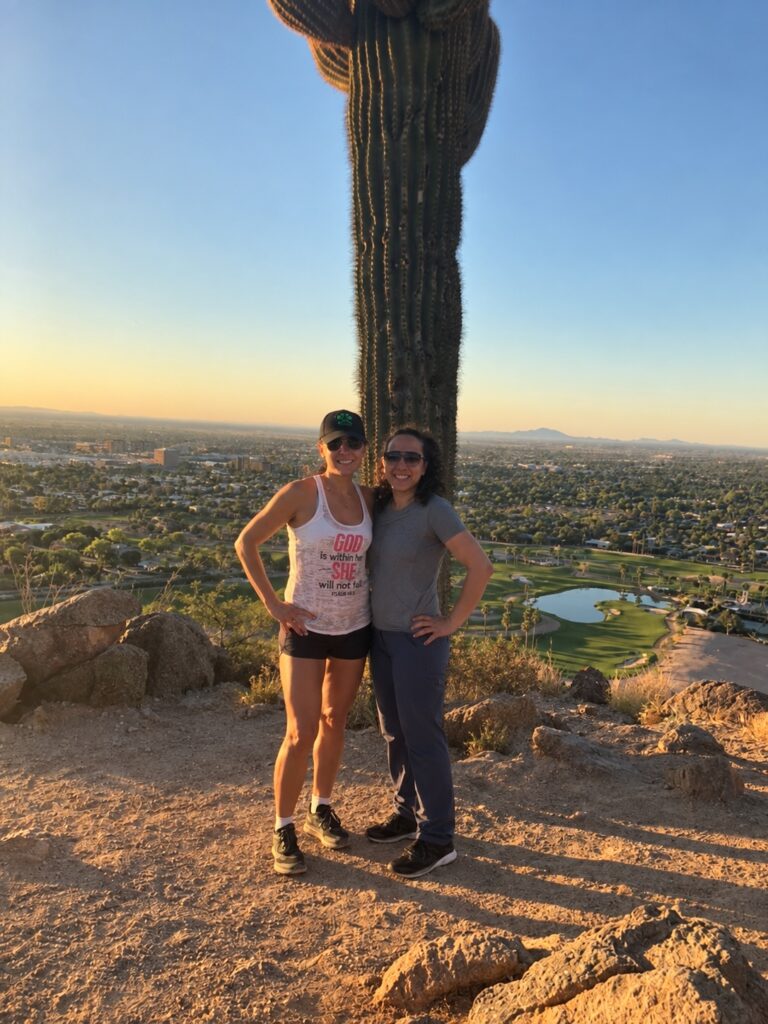
Deborah was my mentor. She was the first person to introduce me to personal development. She encouraged me to start a wellness business that transformed my family’s future, and she was rigorous with her love and her feedback, which is the only kind of mentor worth having. Her cancer, too, was found late.
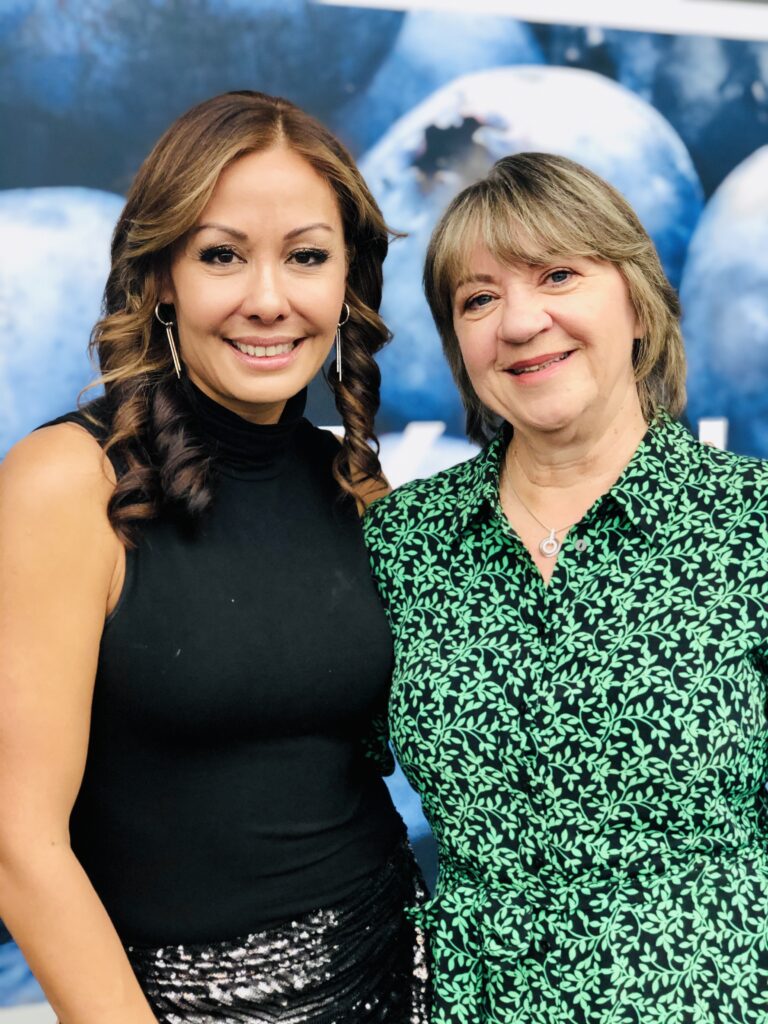
There are others. Ken was my running partner, a father of two young kids, in his forties; by the time his cancer was found it was stage 4. Jessie, like Jessica, was in her thirties. And right now another girlfriend of mine is in late-stage cancer, fighting for her life. Six friends, colleagues, and mentors diagnosed at stage 3 or beyond. Four of them are gone. I have others who were caught at stage 2 and are here today, and the difference between those two groups is not luck or effort or how well they took care of themselves. It is when the cancer was found.
I run a health company. I speak on stages about AI and longevity. I have read the survival tables. None of that made me order the test. Their faces did. And the thing I keep coming back to is that I have a lot of life to live, and so do the women I built Amsara Health to serve.
What I know about women and cancer in this country
The American Cancer Society projects 2,114,850 new cancer diagnoses and 626,140 cancer deaths in the United States in 2026. Behind the national total is a shift that should alarm every woman under 50: cancer incidence in women that age is now 82% higher than in men the same age, up from 51% higher two decades ago. Breast cancer alone will account for 32% of all new cancer diagnoses in women in 2026, and its incidence is rising twice as fast in women under 50 as in women over 50. Jessica and Jessie were part of that statistic before anyone was quoting it.
The good news, and there is good news, is that breast cancer mortality has fallen 44% since 1989, largely because more cancers are found early and treated better. That is the whole argument for early detection in one number.
Why stage at diagnosis is the whole story
Take breast cancer. According to the National Cancer Institute’s SEER data, five-year relative survival is essentially 100% when it is found while still localized, 87.5% when it has reached nearby lymph nodes, and 33.8% once it is distant. Colorectal cancer follows the same curve: 91.3% localized, 16.9% distant. Same disease, same woman, same doctors. The only variable is the calendar.
The problem is that most cancers have no screening test at all. Standard guideline screening covers breast, cervical, colorectal, and lung cancer (and prostate, with a conversation). GRAIL, the maker of Galleri, cites American Cancer Society data showing that roughly 70% of cancer deaths come from cancers with no recommended screening: pancreas, ovary, liver, stomach, esophagus, and dozens more. Those are the cancers that announce themselves late, which is exactly what happened to my friends.
What the FDA’s advisory panel decided
On September 23, 2026, the FDA’s Molecular and Clinical Genetics Panel met for a full day to review GRAIL’s application to approve Galleri as a screening test for adults 50 and older, used alongside standard screening. It is the first multi-cancer early detection test to reach this stage. The panel voted in favor. All ten voting members agreed the test is safe. Six of the ten agreed it is effective, and seven agreed that its benefits outweigh its risks for adults 50 and older when used in addition to guideline screening, with two opposed and one abstaining. The closer vote on effectiveness reflects a fair debate about how much of the long-term benefit is proven yet. The FDA is not bound by the vote, but it usually follows its panels, and a decision on full approval is expected in the coming months. Until then, Galleri remains available as a laboratory-developed test. Here is our full breakdown of the vote.
The FDA’s own briefing document is worth reading, because it is honest about both sides. In the PATHFINDER 2 study of more than 35,000 people, the test’s specificity was 99.85%, meaning fewer than two false alarms per thousand people without cancer. When it did flag a cancer signal, it was right 77% of the time, and it pointed to the correct organ system 94% of the time. In the NHS-Galleri trial of 142,000 people in England, the numbers were similar: 99.74% specificity and a 66% positive predictive value.
The FDA was equally clear about the limits. Galleri caught 35% of the cancers diagnosed within a year in PATHFINDER 2 and 31.6% in NHS-Galleri, and only about one in four early-stage (I and II) cancers. NHS-Galleri did not show a statistically significant reduction in late-stage diagnoses, which is why the debate at the panel centered on the words “early detection.” A negative result does not rule out cancer. A positive result is not a diagnosis. Anyone who tells you otherwise is selling, not informing.
Why who orders your test matters as much as the test
Here is the part the FDA spent a good share of its day on, and the part almost no one talks about. The agency asked its panel how the test’s benefits, risks, and limitations “should be communicated to providers and patients to support shared decision-making.” Its briefing noted that among people with a positive result who turned out not to have cancer, nearly half went on to an invasive procedure. The proposed label says a positive result “requires diagnostic testing with a medically established procedure,” ordered and managed by a qualified clinician.
Read that again from the patient’s chair. A blood test comes back saying “Cancer Signal Detected, likely origin: pancreas or gallbladder.” What happens in the next 48 hours depends entirely on who ordered it. Do they know the positive predictive value, so they can tell you plainly that roughly one in four such signals is a false alarm? Do they know which imaging to order first, and which specialist to call in Phoenix or Tucson? Will they pick up the phone that day, or will you wait two weeks for a portal message? And if it comes back “No Cancer Signal Detected,” will someone remind you that your mammogram and colonoscopy are still due?
That is why I did not order Galleri from a website. I ordered it through Amsara Health, where Dr. Mia Chorney, our Chief Medical Officer, completed GRAIL’s clinical education for ordering providers, as has Dr. Tamara Djurisic. Every Galleri test at Amsara includes a visit before the draw, so you understand what you are signing up for, and a visit after, so no one reads a result alone. Mia is my clinician for this. I trust her with the phone call I hope I never get.
What I told myself before I ordered it
I am in the age range the test is designed for. I am current on my guideline screening, and Galleri does not replace any of it. I understand that the most likely result is a negative one, and that a negative result lowers my odds but does not zero them. I understand that if it is positive, I may go through imaging for something that turns out to be nothing, and I have decided that is a trade I am willing to make. I have a clinician who will walk every step with me.
If you can say those five sentences, you are a good candidate for this conversation. If you cannot, you are a good candidate for a conversation, which is what the discovery call is for. Our full explainer, The Galleri Test in Arizona, covers the science, the cost, and who should not take it, and we will keep it updated as the FDA’s decision unfolds.
For my friends in Arizona
Amsara Health offers the Galleri test to adults in Arizona with the pre-test and follow-up visits included, and our providers are trained to interpret it. Ken did not get a test like this. Deborah did not either. Jessica and Jessie were too young for the one that exists now, and that is its own unfinished fight. I can get it, and I did. If you are 50 or older and you have been meaning to have this conversation, have it this month.

About the author
Susan Sly
Susan Sly is the founder and CEO of Amsara Health and The Pause Technologies, and co-creator of Harmoni, the AI companion for perimenopause and menopause. An MIT Sloan alumna and former co-CEO of a computer-vision company deployed in major health systems, she was named one of CTO Magazine’s top female AI thought leaders for 2026. She writes about women’s health, longevity, and the evidence behind both. susansly.com · LinkedIn
Frequently asked questions
Did the FDA approve the Galleri test?
Not yet. On September 23, 2026, an FDA advisory panel voted in favor of GRAIL’s application for Galleri in adults 50 and older: unanimous on safety, 6 to 4 on effectiveness, and 7 to 2 that benefits outweigh risks. The panel’s vote is a recommendation; the FDA’s final decision is expected in the coming months. Galleri is available now as a laboratory-developed test ordered by a licensed clinician.
How accurate is the Galleri test?
In the PATHFINDER 2 study, specificity was 99.85% and a positive result was confirmed as cancer 77% of the time. The test detected about 35% of cancers diagnosed within a year, and about one in four stage I or II cancers. A negative result does not rule out cancer, and the test does not replace mammograms, colonoscopies, or other guideline screening.
Why should a trained provider order the Galleri test?
A positive result is a signal, not a diagnosis, and requires a diagnostic workup guided by the predicted cancer signal origin. A provider trained in Galleri interpretation can explain the odds, order the right imaging quickly, coordinate specialists, and make sure standard screening continues after a negative result. Amsara Health providers Dr. Mia Chorney and Dr. Tamara Djurisic have completed GRAIL’s clinical education for ordering providers.
How do I get the Galleri test in Arizona?
Amsara Health offers Galleri to adults in Arizona through telehealth, with a pre-test visit, the blood draw at a partner lab, and a follow-up visit to review the result. Begin with a free 15-minute discovery call at amsarahealth.com/discovery-call.
Sources
- FDA, Sept 23, 2026 Molecular and Clinical Genetics Panel meeting (Galleri PMA)
- FDA Executive Summary for the Galleri panel
- FDA Voting Questions
- GRAIL, PATHFINDER 2 results (2026 ASCO)
- NCI SEER, Female breast cancer survival by stage (2016–2022)
- NCI SEER, Colorectal cancer survival by stage (2016–2022)
- AACR Cancer Progress Report 2026, citing ACS 2026 projections
- ACS Cancer Statistics 2026, breast cancer findings (via Docwire News)
- American Cancer Society, cancer incidence in women under 50 now 82% higher than men
- GRAIL, 70% of cancer deaths from cancers without recommended screening (ACS data)
- Galleri for healthcare providers: implementing the test
Have the conversation this month
If you are 50 or older in Arizona and want to know whether the Galleri test belongs in your plan, book a free 15-minute discovery call. A trained Amsara provider will walk you through what it can and cannot tell you, and what happens next either way.
Already a patient? Visit your Amsara Patient Portal →